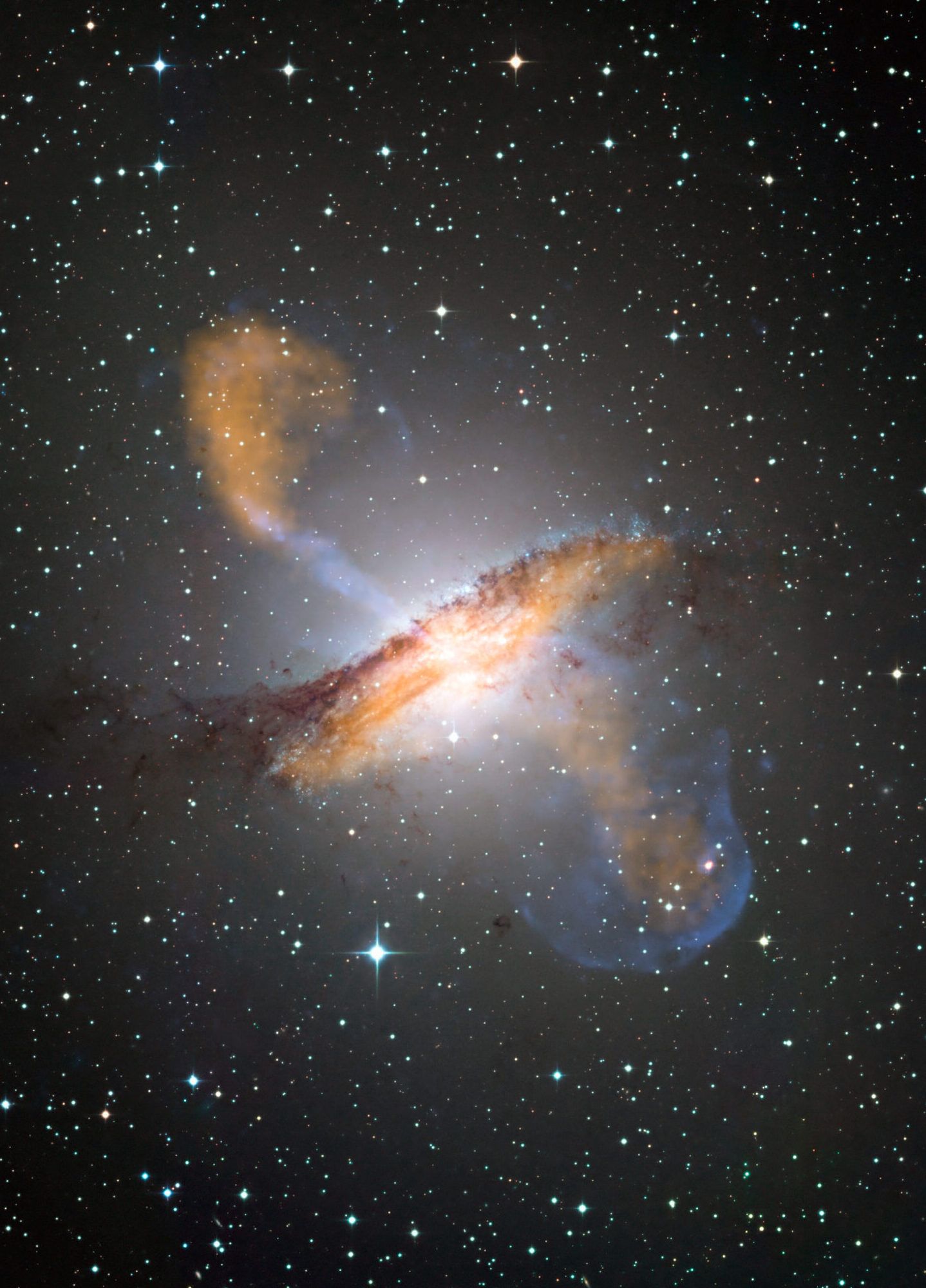
Black holes
Black holes are extraordinary regions of the universe. They are regions of spacetime itself with very special properties.

Under constructionUp soon
Theoretical astrophysicist exploring the most spectacular environments in the universe, from black holes to neutron stars and relativistic plasma.
Welcome to my personal website. I am a theoretical physicist specializing in astrophysics, currently a postdoctoral researcher at the Kavli Institute for Particle Astrophysics and Cosmology (KIPAC) at Stanford University.
My research focuses on theoretical high-energy astrophysics. I explore the most extreme phenomena and environments in the universe, such as black holes and their magnetospheres, neutron stars, and relativistic plasma physics, including magnetic reconnection.
Here you can read more about my research, see my publications, find my videos and posts, or get in touch.
Black holes are extraordinary regions of the universe. They are regions of spacetime itself with very special properties.
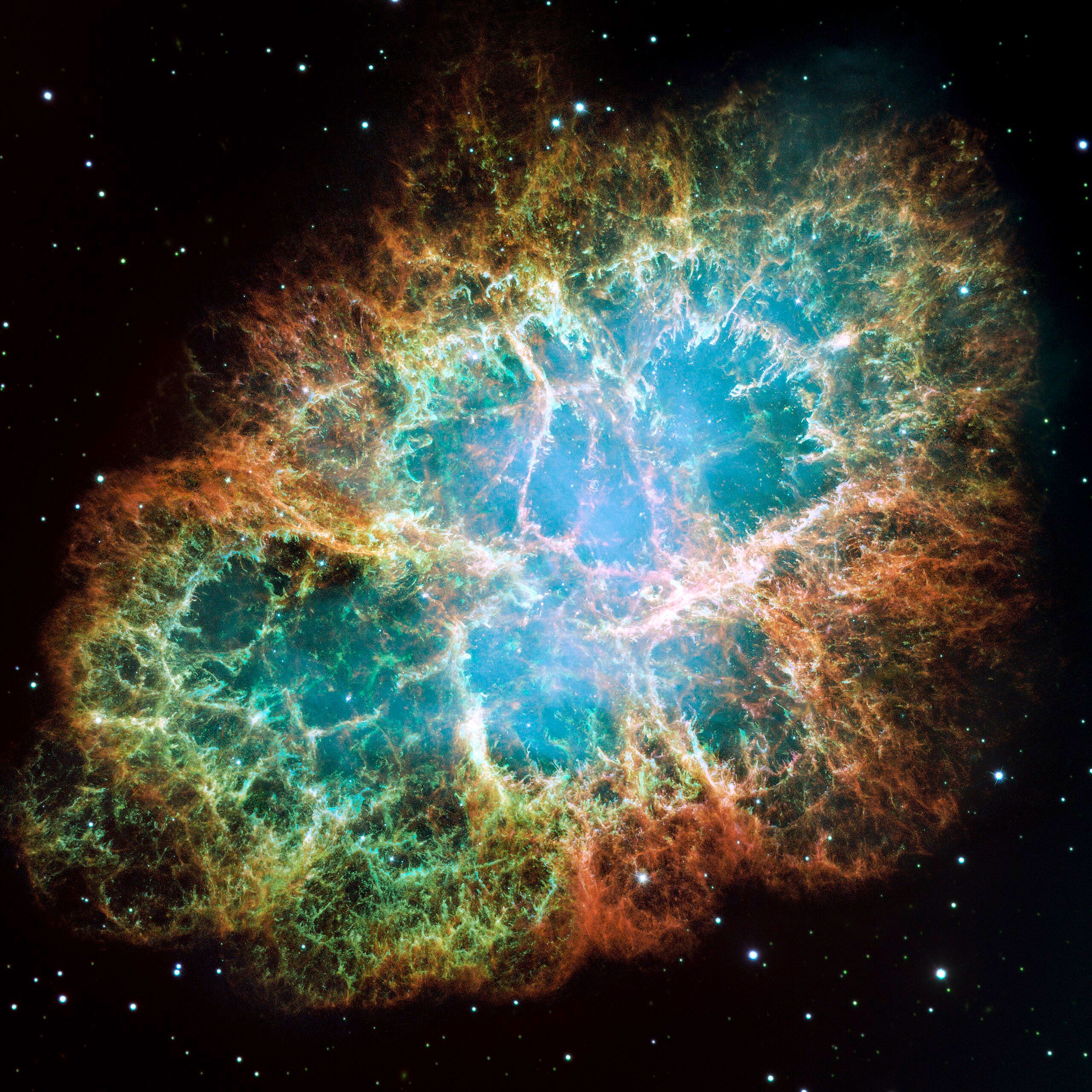
Neutron stars are extremely compact remnants formed in the collapse of a massive star, and are extreme in every aspect.
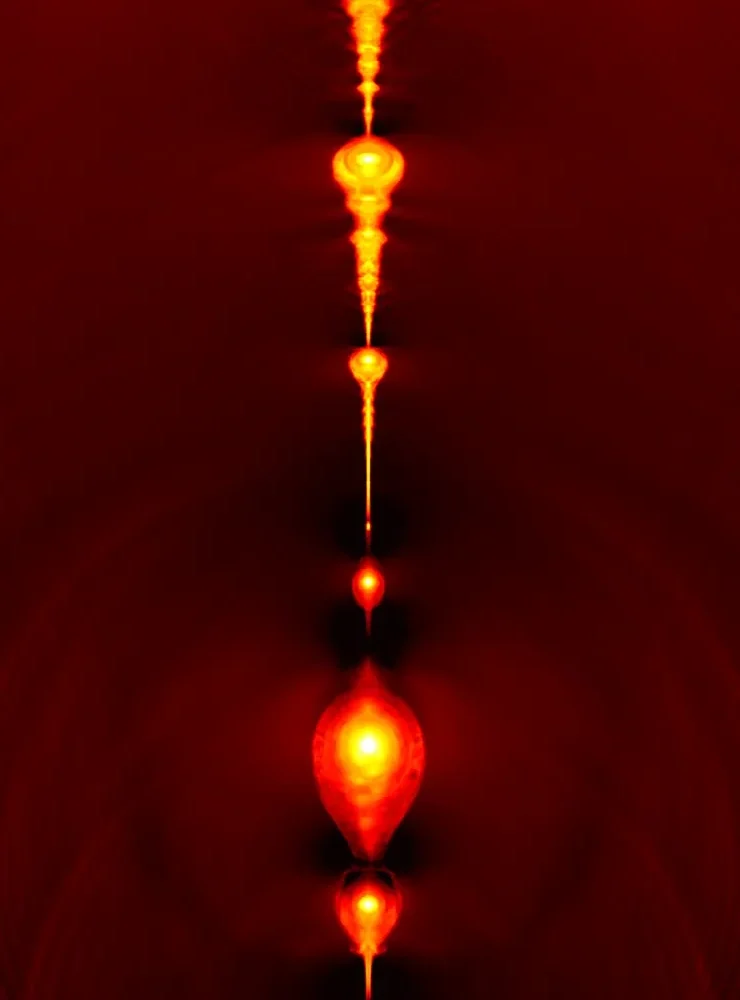
Plasma is a gas-like state of matter composed of ionized atoms and elementary particles. Almost all visible matter in the universe exists in the form of plasma.
Relativistic magnetic reconnection is thought to power various multi-wavelength emission signatures from neutron stars and black holes. Relativistic resistive magnetohydrodynamics (RRMHD) offers the simplest model of reconnection. However, a small uniform resistivity underestimates the reconnection rate compared to first-principles kinetic models. By employing an effective resistivity based on kinetic models - which connects the reconnection electric field to the charge-starved current density - we show that RRMHD can reproduce the increased reconnection rate of kinetic models, both in local current sheets and in global black hole magnetospheres.
Black holes (BHs) can acquire magnetic flux from their progenitor, through merger with a magnetized star, or via prolonged accretion. We study the evolution of BH magnetospheres using axisymmetric general relativistic magnetohydrodynamic simulations. We show that all initial magnetic field configurations, regardless of complexity, ultimately evolve into a split monopole. The magnetospheric evolution proceeds in two phases. In the first phase, pressure equilibrates on fast Alfvénic timescales (~60 gravitational light-crossing times), and the flux on the BH event horizon drops sharply. The second phase proceeds in pressure balance, in which the magnetic flux decays via magnetic reconnection in current sheets, governing the dynamics on slower resistive timescales. We present an analytic model for the second phase, quantitatively describing the evolution of flux and current sheet dynamics. Additionally, we show that in the split monopole configuration, magnetic flux decays exponentially, with higher BH spin leading to slower decay. Our results enable a quantitative prediction of the timescales and spatial structure of these evolving magnetospheres, essential for understanding electromagnetic counterparts to gravitational wave events and reconnection-powered flares from accreting BHs.
A variety of high-energy astrophysical phenomena are powered by the release – via magnetic reconnection – of the energy stored in oppositely directed fields. Single-fluid resistive magnetohydrodynamic (MHD) simulations with uniform resistivity yield dissipation rates that are much lower (by nearly one order of magnitude) than equivalent kinetic calculations. Reconnection-driven phenomena could be accordingly modeled in resistive MHD employing a non-uniform, “effective” resistivity informed by kinetic calculations. In this work, we analyze a suite of fully kinetic particle-in-cell (PIC) simulations of relativistic pair-plasma reconnection – where the magnetic energy is greater than the rest mass energy – for different strengths of the guide field orthogonal to the alternating component. We extract an empirical prescription for the effective resistivity, ηeff = αB0|J|p / (|J|p+1 + (e ntc)p+1), where B0 is the reconnecting magnetic field strength, J is the current density, nt the lab-frame total number density, e the elementary charge, and c the speed of light. The guide field dependence is encoded in α and p, which we fit to PIC data. This resistivity formulation – which relies only on single-fluid MHD quantities – successfully reproduces the spatial structure and strength of nonideal electric fields, and thus provides a promising strategy for enhancing the reconnection rate in resistive MHD simulations.